A flat roof can be repaired when the damage is in one place and the timber deck under it is still dry. It needs a new covering when the felt has gone brittle all over, water sits on it for days after rain, or the deck gives underfoot. The deck is the dividing line: a dry deck takes a patch, a wet one does not. Water sitting on the roof and splits along the laps can be seen from an upstairs window; whether the deck is still firm and dry is what Jordan checks on the survey.
At a glance
- Repair when: the damage is in one place and the deck is dry
- Replace when: the felt is brittle all over, water sits for days, or the deck gives
- Coverings: torch-on felt and fibreglass
- The price: free survey, written down before any work
A felt flat roof wears out in a set order. The surface finish goes first and the sun dries out the bitumen. Then the laps, where one sheet overlaps the next, start to lift. Water that should run to the outlet sits in the low spots, and sitting water works into every weak point it finds. The edges and upstands, where the felt is bent up against a wall, split before anything else.
Under the covering is a timber deck. While the covering holds, the deck stays dry. Once water gets through, the boards soak it up, swell and start to rot, and from then on every patch is laid onto something that is failing. That is why the question is never only about the felt. It is about what the felt is sitting on.
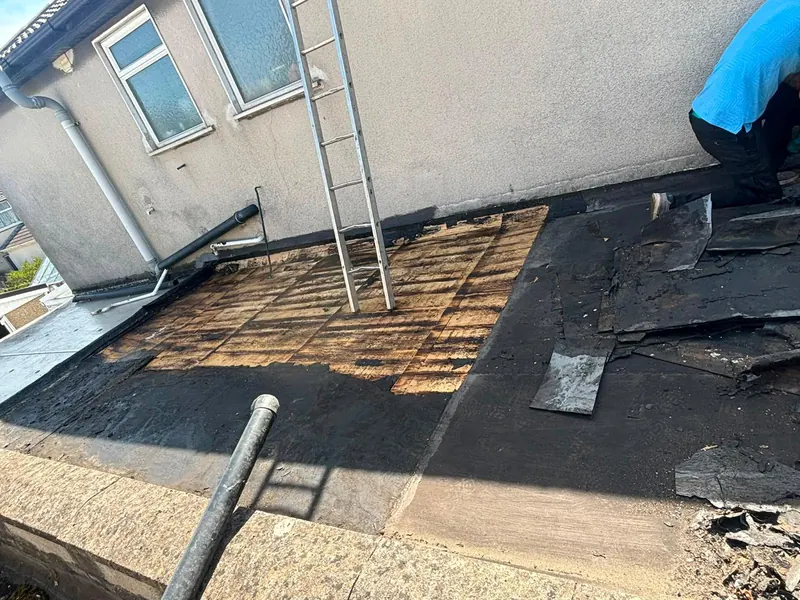
Signs A Repair Will Hold
- The damage is in one place: a single split, a blister or one lifted lap
- The leak shows at one spot, usually beside a wall, an outlet or a rooflight
- On the survey, the felt still bends when pressed, rather than cracking like dried mud
- On the survey, the roof feels firm underfoot, with no dip or spring
- Rain clears off it within a day
Stay off the roof yourself: the two survey signs are Jordan's to check. With those signs the split is patched or the lap bonded down again, the upstand dressed with new lead, or the outlet cleared and sealed. The rest of the roof is left alone. Jordan does that where the survey shows the roof has life left in it, and tells you plainly when it has not.
When A Patch Is Money Spent Twice
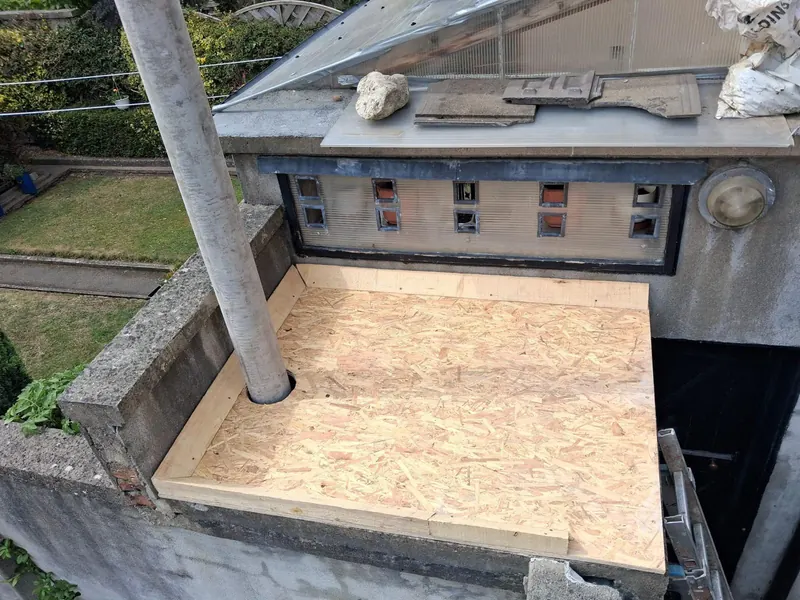
If the leak keeps coming back in a new place after each repair, the covering is failing across the roof, not at one point. Patching it again moves the leak along. The honest answer then is a new covering: the old felt stripped, the deck checked board by board, rotten boards replaced, insulation laid on top if you want a warmer room below, and the new roof laid with a proper fall so the water runs to the outlet.
A free survey, and the price written down before any work starts.
Get a flat roof priceWhere A Flat Roof Meets The Rest Of The House
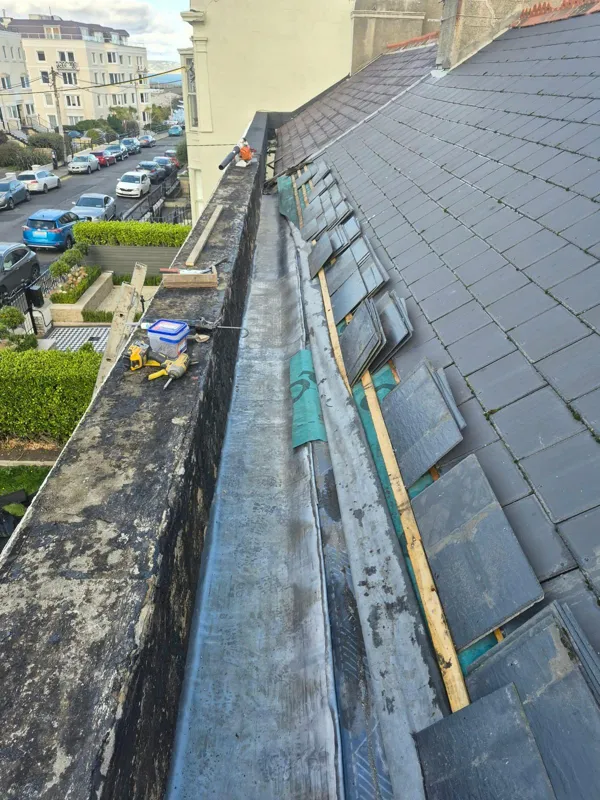
Most flat roof leaks start at an edge: the upstand against the house wall, the trim at the gutter, or a parapet. On a recent job in Dún Laoghaire, Jordan's crew replaced a lead valley that runs along a parapet wall, and covered the top of that parapet in torch-on felt as part of the same job. A flat roof works the same way. However good the covering, it is only as dry as the detail where it stops.
Felt Or Fibreglass
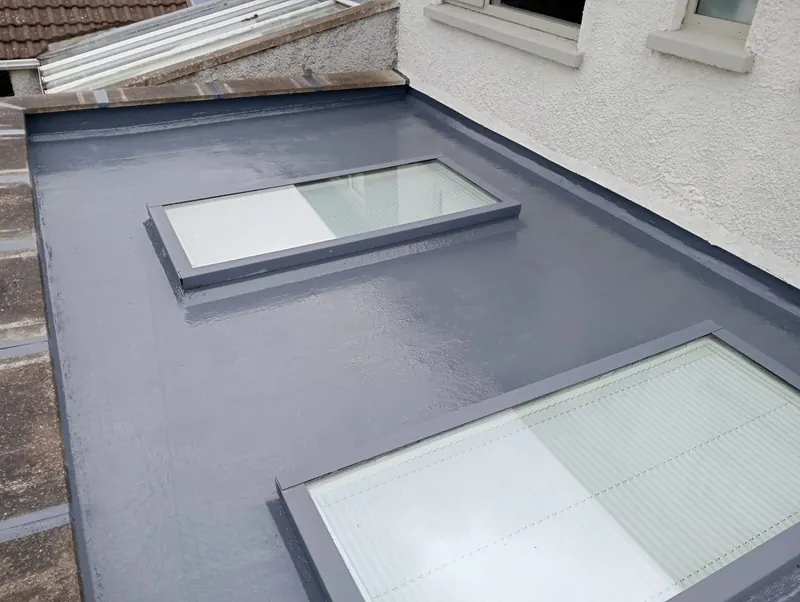
Two coverings suit most flat roofs on Dublin houses. Torch-on felt, laid as a two-layer system, is the straightforward replacement for an old felt roof over a garage or an extension. Fibreglass is laid as one continuous skin with no laps, which suits smaller roofs, balconies and roofs with rooflights set into them, where every join would be a weak point. Jordan tells you which suits your roof, and why, before the price is written.
What Decides The Price
- Repair or new covering. A patch is priced by the work it needs; a new roof by its size and the covering.
- The deck. Rotten boards found once the old felt is off are replaced, and you are shown them before that is priced.
- Insulation, if you want a warm roof.
- The edges, upstands, outlets and rooflights. Each is a detail to finish, and they take the time.
The survey is free and the price is written down before any work starts. Jordan does not price a flat roof over the phone, because the deck cannot be judged from a description. One customer put it this way: "The quote was reasonable. They turned up and did the work when they said they would."
Who Does The Work
Delta Roofing is family-run, over 20 years in business, based in Kimmage, Dublin 12, fully insured and members of the National Guild of Master Craftsmen.